Concrete Cathedral
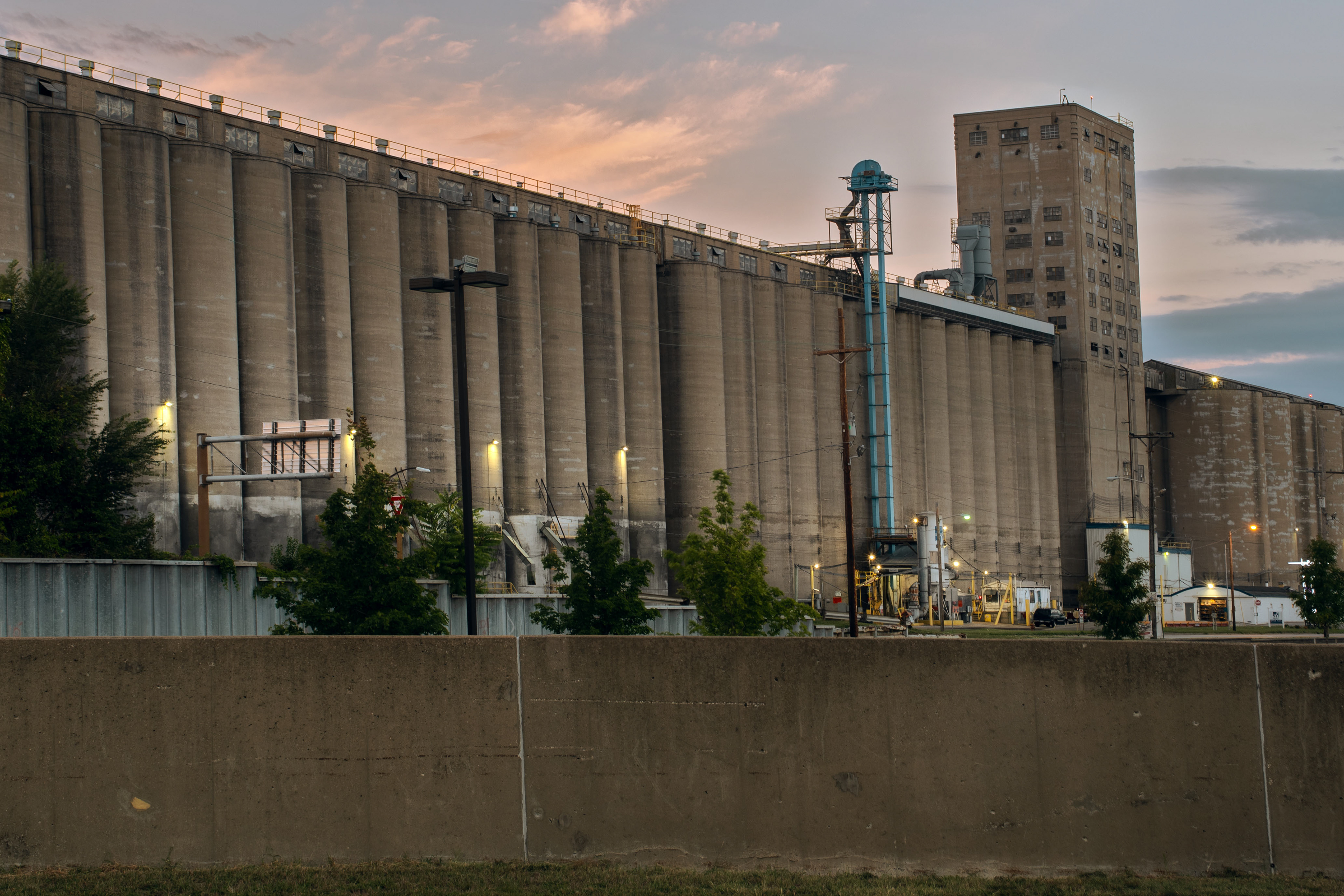
This photograph explores the quiet monumentality of industrial space at the edge of day. The grain silos rise like a concrete cathedral, their repetitive forms emphasizing both scale and endurance. Warm evening light softens the rigid geometry, creating tension between permanence and atmosphere. Small points of artificial light suggest human presence, yet the scene remains largely still—caught between labor and rest. The image reflects on infrastructure as landscape, where utility becomes sculpture and time leaves its mark in weathered surfaces and fading light.
“The Silos at the Edge of Town”
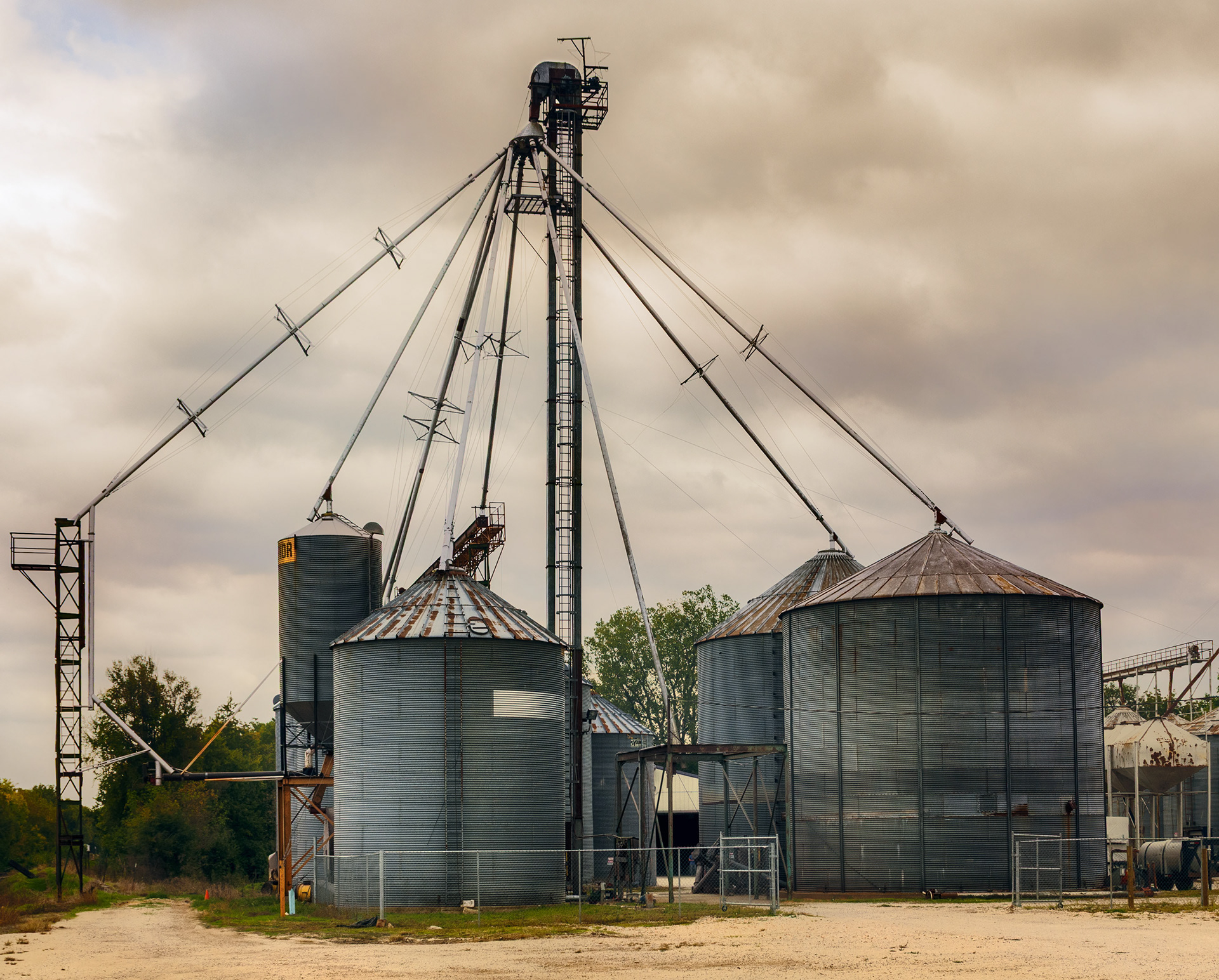
The grain silos rose out of the gravel like quiet sentinels, watching over a town that had long since stopped noticing them. Their metal skins, dulled by years of sun and storm, held the memory of harvests that once filled the air with dust and laughter. Now the conveyors hung still, the ladders untouched, the whole structure humming only with the low murmur of wind threading through cables. Yet there was something steadfast in their presence—a kind of rural resilience that didn’t need to announce itself. Standing before them, you could almost hear the echo of engines, the clatter of grain, the rhythm of seasons that shaped the land and the people who worked it. Here, time didn’t stop; it simply settled.
What the barn remembers
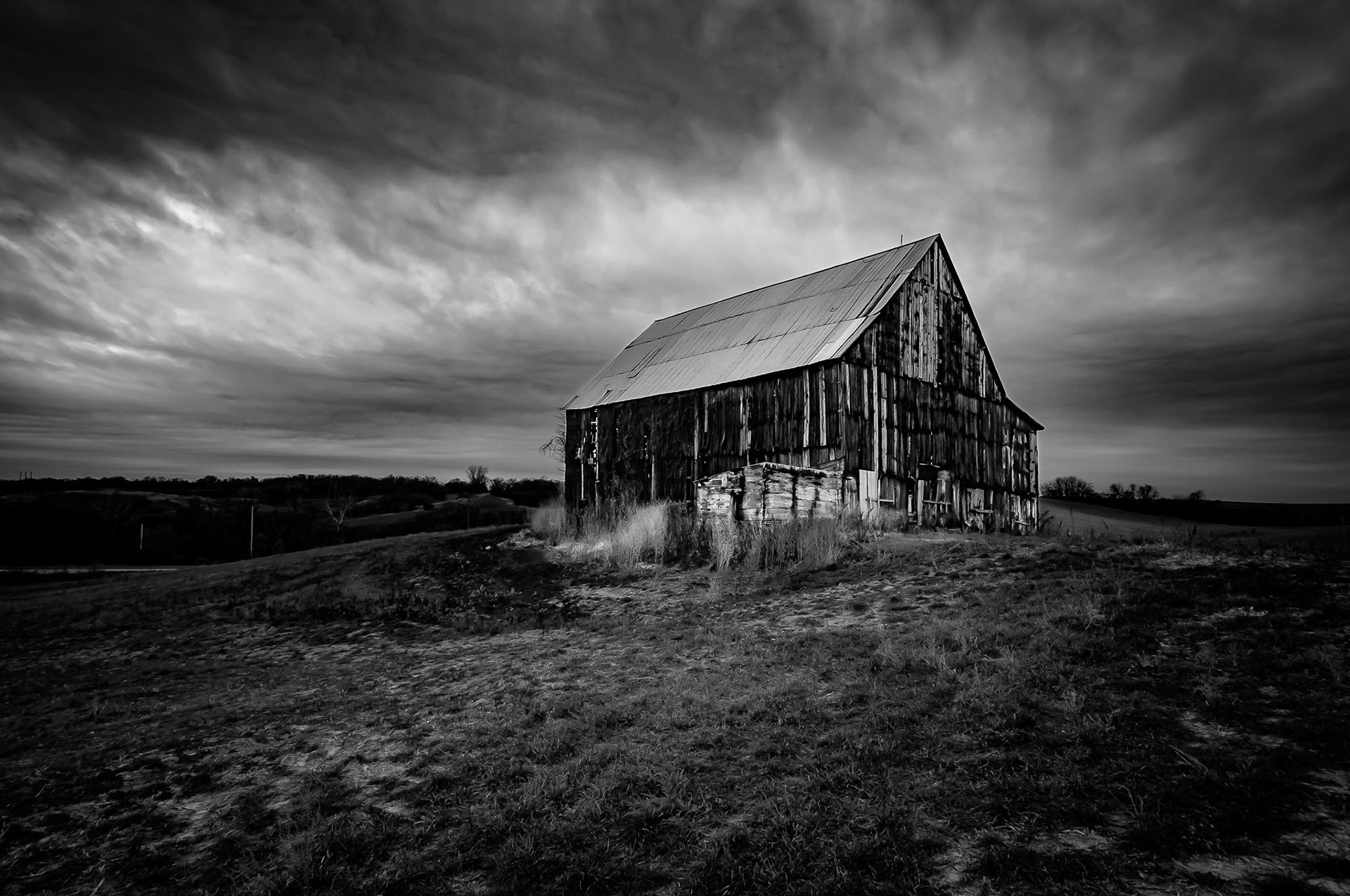
The old barn leaned into the wind the way elders lean into memory—slowly, stubbornly, with stories creaking in every board. Once it had been the heart of the land, its walls echoing with the shuffle of hooves and the rhythm of work that shaped whole seasons. Now the wood had silvered with age, the roof sagged under years of weather, and the small shed out front clung to it like a forgotten companion. Grass pressed close around the foundation, as if trying to hold it upright a little longer. Even in its quiet collapse, the place felt alive with the ghosts of harvests, storms, and hands that built more than they ever wrote down. Standing before it, you could almost hear the past breathing.
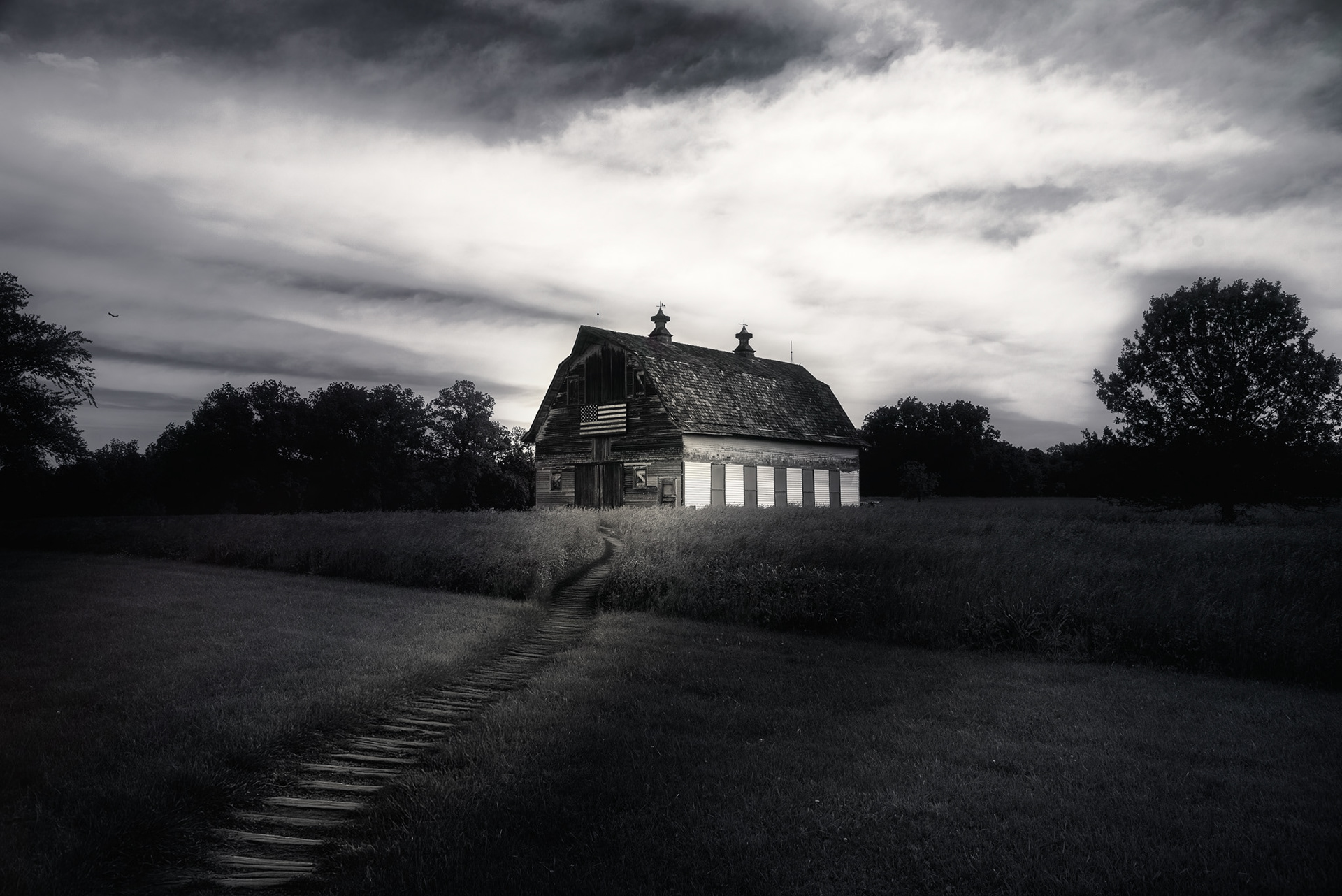
“The Flag Beneath the Storm”
The old barn stood at the end of the winding plank path like a memory someone forgot to put away. Its boards, worn soft by decades of wind and weather, held the quiet dignity of a place that had seen more seasons than stories told about it. The flag on the front—faded but still proud—fluttered just enough to remind you that someone once cared deeply for this patch of land. Overhead, the sky gathered itself into a heavy quilt of clouds, the kind that made the world feel suspended between what was and what might come next. In the hush before the storm, the barn seemed to breathe, holding fast to its place in the field as if it knew that even in decay, it still mattered.
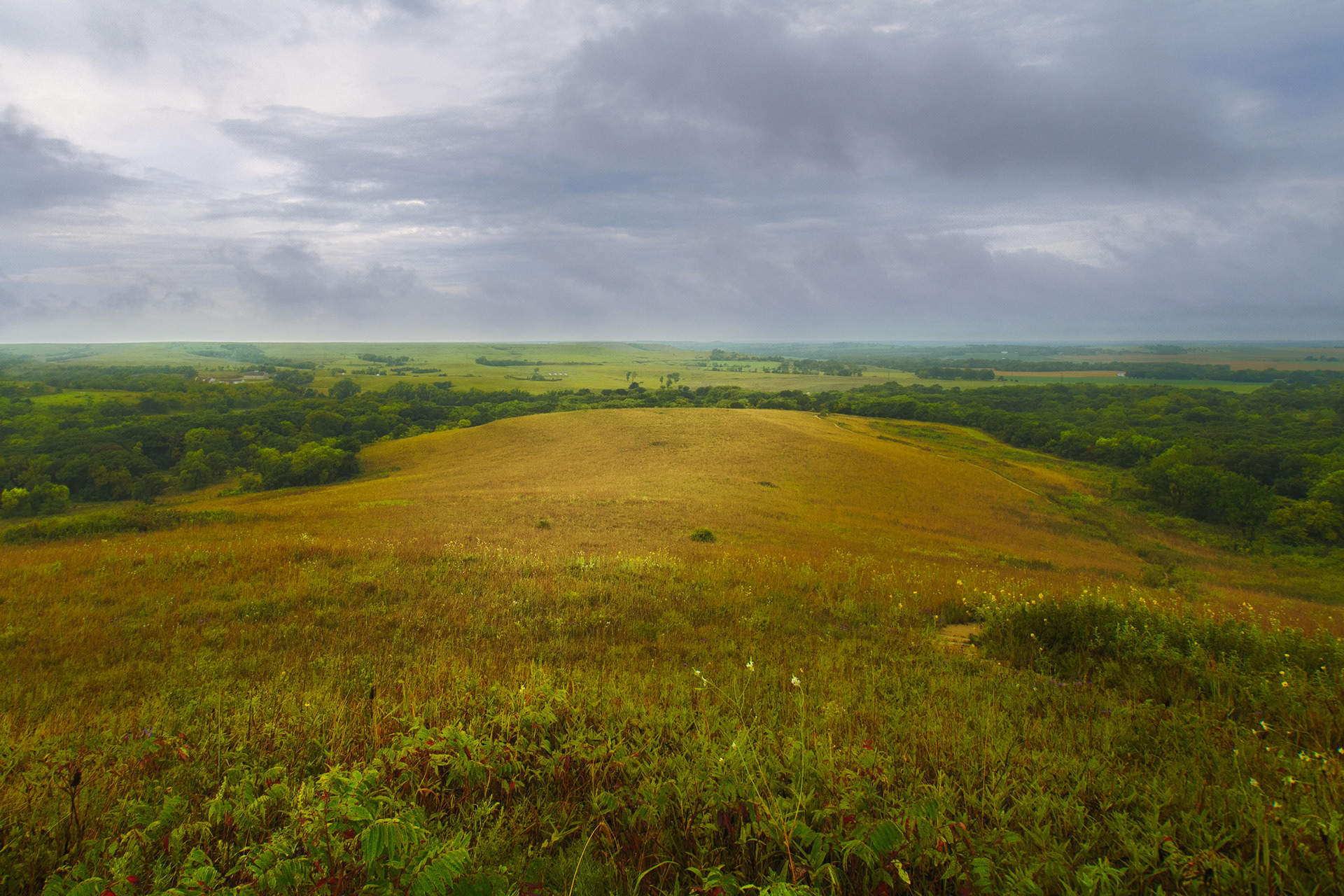
The Prairie that raised us
The hills always seemed taller when we were young, rising like gentle giants over a world we hadn’t yet learned to outgrow. Back then, the grasses brushed our knees as we ran, their whispering hush a sound we thought would follow us forever. Now the prairie stretches out in familiar waves—golden, quiet, patient—as if waiting for us to remember the way things felt before life sped up. The distant fields, the scattered trees, even the heavy sky seem unchanged, holding steady in a way we no longer do. Standing here, it’s easy to believe that time moves differently on the plains, that the land keeps every version of us tucked somewhere between the wildflowers and the wind.